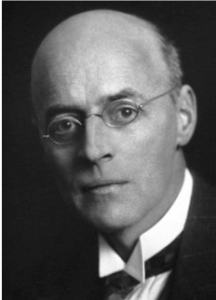
John Wolfe Barry

Sir John Wolfe Barry (1836-1918) [PLOT 4]

Civil Engineer

English civil engineer of the late 19th and early 20th century. His most famous project was the construction of Tower Bridge over the River Thames in London. He was a recognised industry leader He also played a prominent role in the development of industry standardisation, urging the ICE’s Council to form a committee to focus on standards for iron and steel sections. Two members each from the ICE, the Institution of Mechanical Engineers, the Institution of Naval Architects and the Iron and Steel Institute first met on 26 April 1901. With the Institution of Electrical Engineers joining the following year, these bodies were the founder institutions of what is today the British Standards Institution or BSI.

He was elected a Fellow of the Royal Society (FRS) in 1895, made a Knight Commander of the Order of the Bath (KCB) in 1897, elected President of the Institution of Civil Engineers (Pres.Inst.C.E.) in 1898, the year in which he assumed his middle name of Wolfe as an additional surname after receiving an inheritance from his godfather the architect John Lewis Wolfe (1798–1881).
He was also a member of the Smeatonian Society of Civil Engineers. He was chairman of Cable and Wireless from 1900 to 1917. In 1902 he joined the consulting firm of Robert White & Partners, which was renamed Wolfe Barry, Robert White & Partners (later, in 1946, renamed Sir Bruce White, Wolfe Barry and Partners). He married Rosalind Grace, the daughter of Rev Evan Edward Rowsell of Hambledon, Surrey. They had four sons and three daughters. In 1922 a memorial window designed by Sir John Ninian Comper was dedicated to his memory in the nave of Westminster Abbey.

Edward White

Landscape Architect

(1873-1952) [GLADES OF REMEMBRANCE]

Edward White was a distinguished landscape architect.  Born in Worthing, he came to London and met civil engineer H E Milner to whom he became an apprentice.  After taken into partnership, he married Milner’s eldest daughter.  The firm gained a reputation with the owners of large estates and local authorities for the sympathetic treatment of ground contours and natural features.

He was responsible for the gardens at the new Government Building in Ottawa, Bagshot Park, and Drottingholm (for the King of Sweden).  He also planned the first Chelsea Flower Show, the Royal Horticultural Exhibition of 1912, the gardens at the British Empire Exhibition of 1924 and the British gardens at the Brussels Exhibition.  White had a great interest in the cremation movement and for the development of ‘gardens of remembrance’ where ashes could be scattered or buried.  He was responsible for the development of the gardens at Golders Green in 1938, at the West London Crematorium at Kensal Green in 1939, the Garden of Rest at Chipperfield Church, Hertfordshire, and the Glades of Remembrance at Brookwood.

Dennis Wheatley

Novelist. (1897-1977) [GLADES OF REMEMBRANCE]

An English writer whose prolific output of thrillers and occult novels made him one of the world’s best-selling authors from the 1930s through the 1960s. His Gregory Sallust series was one of the main inspirations for Ian Fleming‘s James Bond stories.

Wheatley was commissioned as a 2nd Lieutenant into the Royal Field Artillery during the First World War, receiving his basic training at Biscot Camp in Luton. He was assigned to the City of London Brigade and the 36th (Ulster) Division. Wheatley was gassed in a chlorine attack during Passchendaele and was invalided out, having served in Flanders, on the Ypres Salient, and in France at Cambrai and Saint Quentin.

In 1919 he took over management of the family’s wine business. In 1931, however, after business had declined because of the Great Depression, he sold the firm and began writing.

During the Second World War Wheatley was a member of the London Controlling Section, which secretly coordinated strategic military deception and cover plans. His literary talents led to his working with planning staffs for the War Office. He wrote numerous papers for them, including suggestions for dealing with a possible Nazi invasion of Britain (recounted in his works Stranger than Fiction and The Deception Planners). The most famous of his submissions to the Joint Planning Staff of the war cabinet was on “Total War”. He received a direct commission in the JP Service as a Wing CommanderRAFVR, and took part in the plans for the Normandy invasions. After the war Wheatley was awarded the U.S. Bronze Star for his role in the war effort.

Wheatley mainly wrote adventure novels, with many books in a series of linked works.

During the 1930s, Wheatley conceived a series of mysteries the reader had to inspect this evidence to solve the mystery before unsealing the last pages of the file, which gave the answer. Wheatley also devised several board games including Invasion (1938), Blockade (1939) and Alibi (April 1953)

Some of his books were made into films by Hammer, of which the best known is The Devil Rides Out (book 1934, film 1968). Wheatley also wrote non-fiction works, edited several collections of short stories, and from 1974 through 1977, he supervised a series of 45 paperback reprints for the British publisher Sphere with the heading “The Dennis Wheatley Library of the Occult”.

He was cremated at Tooting and his ashes interred here. He is commemorated on the Baker/Yeats family monument at West Norwood Cemetery.

Forest Frederick Edward Yeo Thomas (1901-1964) [GLADES OF REMEMBRANCE]

Wartime SOE (Special Operations Executive)

Wing Commander Forest Frederick Edward Yeo-Thomas, GC, MC & Bar, known as “Tommy”, was a British Special Operations Executive (SOE) agent in the Second World War. Codenamed “SEAHORSE” and “SHELLEY” in the SOE, Yeo-Thomas was known by the Gestapo as “The White Rabbit”. He was one of the most highly decorated agents in the Second World War.

Sir Edward Robert Peacock (1871-1962) [GLADES OF REMEMBRANCE]

Merchant Banker.
A Canadian merchant banker, born in St. Elmo, Glengarry County, Ontario. He is perhaps best known as a director of the Bank of England, or for his role as receiver general to the Duchy of Cornwall, the principal property management arm of the Royal Family.

Search the Brookwood Cemetery Website

Generic selectors
Exact matches only
Search in title
Search in content
Post Type Selectors
Search in posts
Search in pages