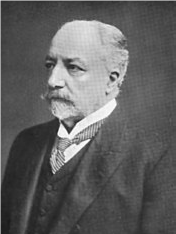
Albert Visetti (1946-1928) [PLOT123]

Musician.

A Dalmatian musician who moved to London where he was Professor of Singing at the Royal College of Music, becoming a Fellow in 1921. He was the stepfather of the novelist Radclyffe Hall.

Born in Solin in Dalmatia to a landowner Italian father and an English mother, Visetti was originally intended by his father for a career as a surgeon so was sent to the University of Padua to study medicine, but affected by the sights of the dissecting room he withdrew and turned instead to music. He was awarded musical scholarships from the Austrian and Italian governments. He studied music at the Milan Conservatory where a friend was Arrigo Boito who wrote the libretto for Visetti’s Cantico des Cantici, and where he was a pupil of Alberto Mazzucato in class composition, winning several awards. While here he made the acquaintance of Verdi.[1] Visetti was later engaged as a conductor at Nice before moving to Paris where he was an assistant to the composer Daniel Auber at the Court of Napoleon III. While in Paris he composed the opera Le Trois Mousequetaires after he met Alexander Dumas, who wrote the libretto. However, the almost complete manuscript was destroyed in a fire during the Siege of Paris.

Visetti moved to England in May 1871 after the turmoil of the Siege of Paris, living there for the rest of his life, being naturalised in 1884. Here he became a champion of English music and musicians, arranging for the works of such composers as Arthur Sullivan, William Sterndale Bennett and Charles Villiers Stanford to be performed for the first time at La Scala in Milan and in Rome and Naples.

Visetti became one of the leading professors of singing in the country, teaching singing at the Guildhall School of Music where his students included Bruce Carey; the London Academy of Music, at Watford School and the Royal College of Music, where his students included Clara Butt,[5] Denise Orme, Jones, Louise, Phyllis Lett and Agnes Nicholls. Visetti was musical adviser to the soprano Adelina Patti for five years, and wrote the popular song La Diva for her. He was Director and Conductor of the Philharmonic Society of Bath from 1878 to 1890 and for whom he wrote two cantatas, The Desert and The Praise of Song. In 1880 Umberto I the King of Italy conferred on him the Order of the Crown of Italy for his literary achievements. He wrote and translated several books including a life of Giovanni Palestrina and wrote a biography of Verdi for the Bells Miniature Series of Musicians (1905). In 1921 Visetti was made a Fellow of the Royal College of Music.

Stanley Hugh Coryton Roberts (1889-1957) [PLOT 119]

Founder of the British School of Motoring.
Inventor, Automotive Pioneer. An outstanding figure in technical education and training in Britain. Roberts was convinced that Britain could maintain its position in the world only by training more people in science and technology. He founded the British School of Motoring in 1909, and the Automobile College in 1923. In the following year, he founded the College of Aeronautical & Automobile Engineering in Chelsea. The young Alec Issigonis, designer of the Mini, was a student there. Roberts also invented many improvements for the audio industry, including the “Vestone” gramophone.

Sir Percy Girouard (1867-1932) [PLOT 123]

Canadian Railway Engineer, High Commissioner of Northern Nigeria, and the East Africa Protectorate.
Born in Montreal, Quebec, the son of Désiré Girouard and Essie Cranwill, he attended Collège de Montréal (1877–1878) and College St. Joseph in Trois-Rivières (1879–1882) and graduated from the Royal Military College of Canada in Kingston, Ontario, in 1886.

Girouard worked for two years on the Canadian Pacific Railway’s “International Railway of Maine” in Greenville, Maine, before he was commissioned in the Royal Canadian Engineers in 1888. From 1890–1895 he was in charge of the Woolwich Arsenal Railway before he joined the Dongola Expedition in 1896 and was asked by Kitchener to supervise the extension of the old Wadi-Halfa to Akasha railroad. In 1897 he was ordered by Kitchener to build a railway from Wadi Halfa to Abu Hamed, 235 miles directly across the Nubian Desert, which eliminated 500 miles of navigation up the Nile River. This line allowed Kitchener to move his armies into the heart of the Sudan and defeat the forces of the Khalifa at Atbara and Omdurman in 1898. By then Girouard had been appointed President of Egyptian State Railways and was responsible for clearing the congestion at the Port of Alexandria.

In October 1899 Girouard was sent by the War Office to South Africa to advise on the railway situation of the Cape Colony. When the Boer War (1899–1902) broke out he became Director of Imperial Military Railways which included the lines in the Cape, as well as the lines taken over from the Boers in the Orange Free State and the Transvaal. His rapid reconstruction of the damaged lines and the innovative deviations around destroyed bridges, enabled the rapid movement of men and material to support the advance of Lord Robert’s forces in 1900 to capture Pretoria. Girouard remained in South Africa as Commissioner of the Central South African Railways until pressure from the Johannesburg mine owners to reduce railway expenses forced his resignation in 1904.

In 1906, Winston Churchill, then Under-Secretary of State at the Colonial Office, promoted Girouard as High Commissioner in Northern Nigeria. Girouard was also responsible for building a railway from Baro, on the Niger River, 366 miles north to the ancient city of Kano. As Governor he supported the work of the Northern Nigerian Lands Committee and the legislation which resulted from this work had the effect of preventing the establishment of private property in land. He then served as governor of the British East Africa Protectorate (Kenya) from 1909 to 1912. His involvement in the controversial move of the Maasai led to a smoldering dispute with the Colonial Secretary, Lord Milner, who accepted his resignation in 1912. By then Girouard had been offered a position as the managing director of the Eslwick Works of the armaments and shipbuilding concern of Armstrong Whitworth and Co. Ltd.

From 1912 until 1923 Girouard remained at Armstrong’s except for a brief period in 1915 when the “Shell Crisis” forced the British Government to abandon its “business as usual” policy. Kitchener had asked Girouard for advice on the production of munitions and supported his appointment as Director General of Munitions in the newly formed Ministry of Munitions under Lloyd George. But Girouard could not work under a politician and six weeks later he returned to work at Armstrongs.

He received the Distinguished Service Order (DSO) following the defeat of the Sudanese, and in November 1900 was knighted and appointed a Knight Commander of the Order of St Michael and St George (KCMG) for his services in South Africa. In 1903 he married Mary Gwendolen Solomon, the only child of Sir Richard Solomon, at Pretoria, Transvaal. They had one son. Girouard died in London, in 1932.


Margaret, Duchess of Argyll (1912-1993) [PLOT 119]

Born Ethel Margaret Whigham 1st December 1912. Her father was a Scottish millionaire she was an only child. Her early years were spent in New York. In 1930 she was presented at court and voted debutante of the year.

Margaret was a glamourous and elegant woman; her clothes were by Norman Hartnell and Victor Stiebel. Her first marriage was to Charles Sweeny who formed the Eagle Squadron, they had three children. Divorced in 1947, she married Ian Douglas Campbell in 1951, this marriage end in a rather sensational divorce which is how Margaret is famously known. She died in 1993 and is buried alongside her first husband who died a few months before her.


Syed Al Razawi Ameer Ali (1846-1928) [PLOT119]

Founder of the Muslim League.
An Indian/British Indian jurist hailing from the state of Oudh from where his father moved and settled down at Bengal Presidency. He was a prominent political leader, and author of a number of influential books on Muslim history and the modern development of Islam, he is credited for his contributions to the Law of India, particularly Muslim Personal Law, as well as the development of political philosophy for Muslims, during the British Raj. He was a signatory to the 1906 Petition to the Viceroy and was thus a founding-member of the All India Muslim League.

Search the Brookwood Cemetery Website

Generic selectors
Exact matches only
Search in title
Search in content
Post Type Selectors
Search in posts
Search in pages