Brookwood Cemetery celebrates second Green Flag Award

Brookwood Cemetery celebrates second Green Flag Award

Woking’s Brookwood Cemetery, a Historic England significant heritage destination, has once again received the National Green Flag Award status.

The award scheme, managed by the leading environmental charity Keep Britain Tidy under licence from the Ministry of Housing, Communities and Local Government, recognises and rewards well-managed parks and green spaces, setting the benchmark standard for their management across the United Kingdom and around the world. The purpose is to promote the need to have access to quality green space and enable residents live a healthier lifestyle.

In recent months, as part of the ongoing restoration of Brookwood Cemetery, Woking Borough Council has remediated 7,000 cubic metres of contaminated land within the grounds to create a beautiful new burial site and wetland area.

Cllr Kevin Davis, Woking Borough Council’s lead member for Brookwood Cemetery, said: “Brookwood Cemetery is a site like no other. The natural beauty, history and ecological value makes the grounds a unique asset to the community. “Renewing our Green Flag status is a remarkable achievement to be proud of and a testament to the recent restoration works the cemetery has seen. The new features have transformed the area and with the addition of contemplation spots and benches over the wetland, the site welcomes visitors with a renewed warmth and an intimate atmosphere.”


Avril Kirby, Brookwood Cemetery Manager, continued: “The Council is committed to improving the borough’s biodiversity and green infrastructure. It brings me great pride that this prestigious award has once again been honoured, especially after the hard work and dedication from all the teams involved in creating the new burial site, the wider restoration programme and the general upkeep of the site.”

New burial site and wetland area within Brookwood Cemetery

New burial site and wetland area within Brookwood Cemetery

As part of the ongoing restoration of Brookwood Cemetery, Woking Borough Council has remediated 7,000 cubic metres of contaminated land within the cemetery to create a beautiful new burial site and wetland area.

The new five and half acre site within the North Cemetery will be used predominantly for Muslim burials as other sites within the cemetery begin to reach capacity. The new site has space for 480 individual burial plots spread across two grassland areas which are linked by a raised boardwalk complete with contemplation spots and benches looking out onto the wetland.

The mature and established trees on site, some of which date back to the cemetery’s original plantings in 1852, continue to play a pivotal role in the design providing cover for the meandering pathways that connect to the boardwalk. New planting includes a number of unusual ornamental tree and shrub species that resonate with the cemetery’s Victorian design, along with native shrubs and wildflower.

Speaking about the works, Ian Tomes, Woking Borough Council’s Asset Manager, said: “It has taken us three years to remediate the land which was used by the previous owners as an illegal tip site. The original enforcement noticed served by Surrey County Council required the removal of all of the dumped material but with the help of property and construction consultants, Synergy LLP, and landscaping architects, Terra Firma Consultancy Ltd, we’ve been able to screen the material on site and use it to form two grass covered mounds, the tops of which will be used for internments.

“The creation of a wetland has enabled us to turn the site’s complex hydrology into a feature. The boardwalk design takes into account the site’s fluctuating water levels, and we’ve added marginal aquatic planting to enhance the appearance of the wetland.”

As well as the provision of good quality grave space and environmental improvements, the £800,000 project also capitalised on some of the cemetery’s historical features, supporting the council’s aim of transforming Brookwood Cemetery into a major heritage destination. Ian Tomes explained: “We had to widen the main entrance of the North Cemetery to get vehicles and machinery on and off site so we used this opportunity not only to improve the appearance of the main entrance but also to make reference the cemetery’s historic railway.

“Feature paving, which forms part of the new road surface, mimics the tracks of the London Necropolis Railway that brought Victorian mourners and the deceased to Brookwood. The tree lined route which the trains took has been emphasised by the new ‘tracks’ making it much easier for visitors to identify and appreciate.”

A small tree planting ceremony involving the Mayor of Woking, members of the Brookwood Cemetery team and representatives from each of the specialist contractors took place on Monday 20 September to the mark the completion of the project.

Addressing the group, the Mayor of Woking, Cllr Liam Lyons, said: “This wonderful new wetland and burial area will further enhance one of the borough’s greatest historic assets. I congratulate you all for your efforts and think you’ve done an amazing job, not only in returning this part of cemetery back to public use but also in transforming it into a beautiful, nurturing space that will support the grieving or anyone looking to find comfort in nature and the outdoors. Well done all.”

Woking Borough Council’s Lead Member for Brookwood Cemetery, Cllr Kevin Davis, said: “In July 2020, the Council approved the Brookwood Cemetery Masterplan and Experience Plan which set out a number of broad policies by which the site will be managed and developed in the future. They support a vision of a sustainable working cemetery leading the way in heritage conservation which other sites will look to. I think these latest works are a really good example of how we intend to improve the site while also retaining and enhancing all the special features that make Brookwood Cemetery so unique.

Woking Asian Business Forum wins Lottery grant for Brookwood Cemetery project

Woking Asian Business Forum wins Lottery grant for Brookwood Cemetery project

Woking Asian Business Forum has been awarded £93,400 from the National Lottery Heritage Fund, for a 2-year project aimed at exploring and documenting minority burial grounds in Brookwood Cemetery.

Unknown to most, Brookwood Cemetery is host to the highest concentration of minority burial grounds in the UK. Apart from a wide range of Muslim burial grounds, these include the first Zoroastrian burial ground established in Europe, as well as Swedish, Latvian and Serbian grounds, to name but a few. These burial grounds constitute an important part of Brookwood Cemetery, and they represent a unique cultural heritage that has so far remained undocumented.

That is what the WABF-led project aims to address. Working with Brookwood Cemetery, Surrey History Centre, Brookwood Cemetery Society and The Lightbox, the project will collect information concerning the history and rituals relating to the burial grounds, and ensure that this information becomes widely available. Accordingly, findings from the project will be available on the website ‘Exploring Surrey’s Past, managed by Surrey History Centre, and an app will be developed, enabling visitors to Brookwood Cemetery to access information about the minority burial ground while visiting the cemetery. Additional outputs include a documentary, an exhibition at The Lightbox, and thematic walks in Brookwood Cemetery, in collaboration with Brookwood Cemetery Society.

Woking Asian Business Forum has been actively supporting local communities since its establishment in 2007, and chairman Shahid Azeem is enthusiastic about this new opportunity for expanding on the ongoing work of the organisation: ‘We are very excited that the National Lottery Heritage Fund has decided to support this important project. Moreover, the project is very timely, as it supplements the ambitious plans for Brookwood Cemetery that Woking Borough Council has put forward recently’.

Commencing in September, the project will be managed by Woking-based social researcher Ole Jensen, working with local stakeholders and volunteers. More details about the project can be found at the website of Woking Asian Business Forum, http://www.wabf.org.uk/.

HS2 – London’s deceased from Euston’s St James’s Gardens to be reburied in Surrey’s Brookwood Cemetery

HS2 – London’s deceased from Euston’s St James’s Gardens to be reburied in Surrey’s Brookwood Cemetery

Relocations follow long history of London reburials at Brookwood cemetery

HS2 Ltd, working with the Archbishops’ Council of the Church of England, have agreed with Brookwood Cemetery in Surrey for reburials as a result of excavations at St James’s Gardens to take place there.

In October 2018, HS2 archaeologists began the excavation of one of London’s 18th and 19th century burial grounds, to the west of Euston station in St James’s Gardens. The disused cemetery is required for the construction of the UK’s new high speed railway line High Speed Two and the new London HS2 station. The site was home to over 50,000 of London’s deceased.

Brookwood Cemetery was conceived in 1849 by the London Necropolis Company to house London’s deceased at a time when the capital was unable to accommodate increasing numbers.

Brookwood was connected to the capital by a special railway branch line, and the capital’s dead were taken there by hearse train carriages. Initially there were two stations at the cemetery – the northern one serving the non-conformist side of the cemetery and the southern the Anglican side.

It is not unusual for the populations London’s burial grounds to be relocated, and Brookwood Cemetery has reburied London’s deceased for over 150 years. The first major reburials took place in 1862 when the construction of Charing Cross Railway station and the routes into it required the burial ground at Cures College in Southwark to be demolished. London’s Euston station was extended westwards in the 1940s and some of the occupants of St James’s Gardens required reburial. Those remains were rehomed at Brookwood so this agreement to rebury the remaining occupants of St James’s Gardens there means that the buried population will remain together.

Helen Wass, HS2 Ltd’s Head of Heritage said:

“Throughout our archaeology programme and the excavation of burial grounds, we have treated the buried population with due dignity, care and respect. The final destination for the human remains excavated from St James’s Gardens is fitting, as they will be reunited with the previously relocated burials, moved over 70 years ago.

“HS2’s unprecedented archaeology work between London and the West Midlands has been a once in a lifetime opportunity to tell the story of our past, create opportunities in the present and leave a lasting legacy for generations to come.”

Cllr Graham Cundy, Woking Borough Council’s Lead Member for Brookwood Cemetery, said:

“Established mid-19 century on heathland acquired from Lord Onslow, Brookwood Cemetery is one of the largest burial sites in the country. A new grassland plot on the south side of the cemetery has been prepared where Brookwood will once again accommodate those displaced by the Capital’s expansion.

“Although you can no longer arrive at Brookwood via the London Necropolis Railway, you can access the cemetery directly from Brookwood mainline train station. The 500 acre site is a Grade I listed park and the grounds are open daily to visitors who want to explore the cemetery’s historic ties to London.”

A team of over 200 archaeologists and related specialists undertook the careful archaeological work, in advance of construction. They have already discovered much about the lives and deaths of ordinary Londoners’ as well as uncover the remains of notable people including explorers, soldiers, artists and musicians. Further analysis of a proportion of the human remains will tell us more about the individuals who inhabited London at this exciting time in its history.

All the human remains are to be reburied in consecrated ground, as per HS2 Ltd’s commitment to the Archbishops’ Council of the Church of England.

It was announced in October 2019 that the remains of one of St James’s Gardens population, Captain Matthew Flinders, the British explorer who first circumnavigated Australia and gave the country its name, will be buried in his home village of Donington, Lincolnshire. This follows a request made by the descendants of the Flinders family and the local community for his remains to be returned to the village where he grew up.

The fascinating story of London’s past uncovered through the excavations at St James’s Gardens is currently being showcased in a BBC documentary series, HS2 – The Biggest Dig. The three part series continues on Tuesday 22nd September on BBC Two and is available on BBC iPlayer.

Brookwood Cemetery set to become a major heritage destination

Brookwood Cemetery set to become a major heritage destination

Woking Borough Council has approved plans that will support the ongoing conservation of Brookwood Cemetery and encourage visitors to explore this globally significant heritage site.

The Masterplan and Experience Plan approved at Full Council (30 July 2020) set out a number of broad policies by which the site will be managed and developed in the future. They support a vision of a sustainable working cemetery leading the way in heritage conservation which other sites will look to.

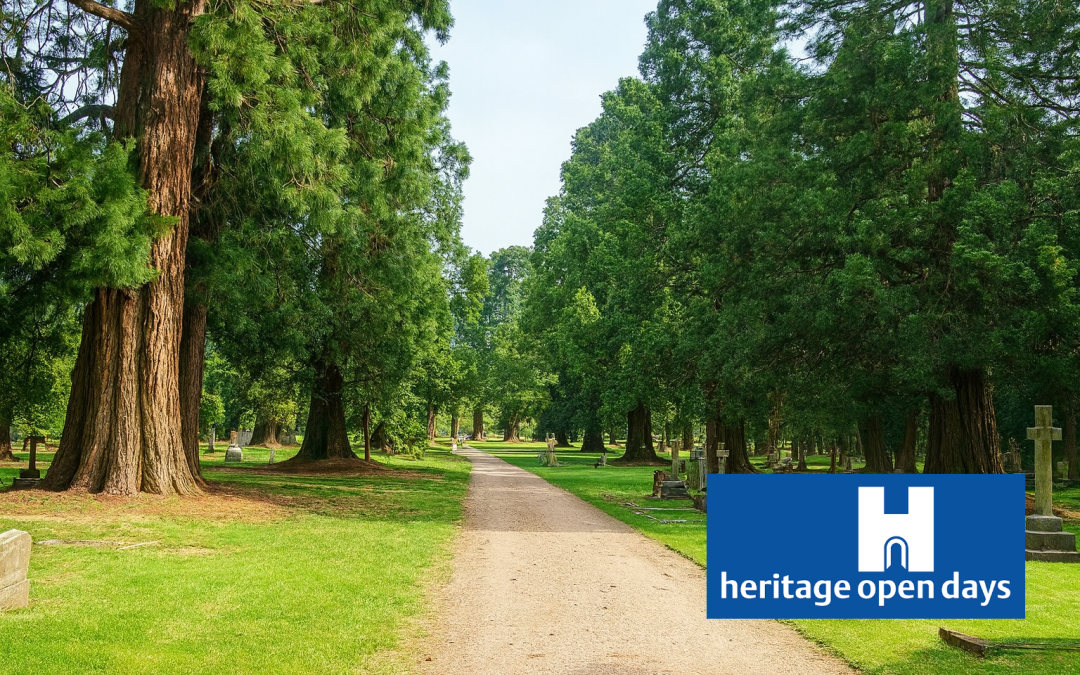
The plans focus on enhancing the cemetery’s unique characteristics such as the railway line that serviced the cemetery up until its London terminus was bombed during the Blitz; the substantial collection of Giant Redwoods thought to be the earliest and grandest in the country; and the cemetery’s historic ‘Ring’ with its high quality Victorian monuments, many of which are Grade I listed.

New visitor facilities including a café, walking trail, education centre and the provocatively titled, ‘Museum of Death’ are among the plans to attract new audiences and promote greater use of this largely hidden public asset.

Ensuring the experience of visiting Brookwood remains that of visiting a cemetery, new information points and zoning will make the site’s historical and ecological landscapes easier to navigate and explore.

Cllr Graham Cundy, Woking Borough Council’s Lead Member for Brookwood Cemetery, said:
“We now have a set of plans that will help us take the cemetery forward over the next ten to twenty years. “First and foremost, the cemetery’s main function is, and always will be, to provide a dignified and respectful resting place for Woking’s deceased, of all faiths and none. As stated in the Masterplan, all future development must sustain and support this objective.

“The Experience Plan is a much about inspiring residents to explore and appreciate the cemetery as it is about attracting new audiences from further afield. An expanded programme of events, tours, exhibitions and workshops will bring to life the themes and cultural wonders within the cemetery, while highlighting the different aspects that make Brookwood a heritage site with immense local, national and global significance.”

Brookwood Cemetery was founded mid-nineteenth century after a cholera epidemic (1848-49) exacerbated the problem of overcrowding across London’s cemeteries. Built by the London Necropolis and National Mausoleum Company (LNNMC) on 2,268 acres of heathland purchased from Lord Onslow, Brookwood was reputed to be the largest cemetery in Europe and the pinnacle of Victorian garden cemetery design.

Cllr Ayesha Azad, Woking Borough Council’s Portfolio Holder for Asset Management, said:
The Council acquired Brookwood Cemetery for the people of Woking. Over time the site has become dissected and lost from public view both physically and metaphorically. We intend to change that and detailed within the plans is a cemetery that is seen as community asset, which supports both physical and emotional wellbeing and provides opportunities for learning and shared cultural experiences.

HRH The Earl of Wessex visits Brookwood Cemetery

HRH The Earl of Wessex visits Brookwood Cemetery

This week (Wednesday 1 July), The Earl of Wessex received a private tour of Brookwood Cemetery, one of the largest and culturally significant burial sites in the country.

slide2
slide3
slide4
slide5
slide6

His Royal Highness was greeted by Strategic Asset Manager Ian Tomes who gave a presentation on the history of the grade 1 listed park and garden near Woking, and took The Earl with the High Sheriff, Lord Lieutenant of Surrey and the cemetery manager on a tour of the site. His Royal Highness met all members of the cemetery staff who have worked throughout the Covid 19 crisis to provide an important service for the bereaved and their relatives.The Earl was shown the route of the old railway line and south station platforms by which coffin trains brought bodies into the cemetery and from there His Royal Highness was taken to St Edward the Martyr Orthodox Church, which contains the relics of Edward II, the young Saxon King slain at Corfe Castle in 978.

Cemetery Manager, Avril Kirby, said:
“Brookwood Cemetery was founded in 1852 to house London’s dead and was uniquely serviced by its own railway. The Earl was escorted to the South of the cemetery to see historic monuments including the life size marble statue of Elaine Maynard Falkiner (d.1900), first wife of Sir Leslie Falkiner; the plot where Lord Nelson’s granddaughter, Horatia Nelson Johnson (d. 1890), is buried; and the striking memorial of Giulio Salvati (d.1898), the Venetian glass and mosaic merchant whose commissions adorn the domes of St Paul’s and Westminster Abbey.

One of the listed memorials in the cemetery marks the grave of Dr Gottlieb William Leitner (d.1899), who was responsible for making Woking a major centre for Islam. He was a noted linguist and founder of the Oriental Institute Europe on the site of the vacant Royal Dramatic Collage near Woking. Today this site is better known as the home of the Shah Jahan Mosque, Britain’s first purpose-built Islamic place of worship.

In more modern times, decades of neglect saw Brookwood Cemetery placed on Historic England’s Heritage at Risk Register so in 2014, Woking Borough Council stepped in and acquired the site with a view to restoring the cemetery to its former glory.

Cllr Ayesha Azad, the Council’s Portfolio Holder for Asset Management, said:
“There was a danger that the rich history and architectural wonders within the cemetery would be lost forever but since acquiring the site we’ve been working to turn that around“Brookwood has the potential to be a jewel in Woking’s crown and The Earl’s visit was an opportunity for the cemetery team to talk to him about our extensive renovation and conservation plans, which include a new visitor centre and enhanced access to this vast outdoor space.”

His Royal Highness was shown inside the largest mausoleum in the cemetery, commissioned in 1877 by George Henry, the 5th Earl Cadogan for the burial of his eldest son, Albert Edward George Henry Cadogan, the Viscount of Chelsea. In 1910 it was converted in to a columbarium by its new owners for the storing of ashes. The Grade II listed structure is one of 15 monuments earmarked for renovation if the cemetery’s ambitious conservation plans are approved.

Due to its huge scale and capacity, Brookwood continues to be a favoured resting place. During his visit, The Earl had the opportunity to talk to members of the Surrey Local Response Forum responsible for managing the excess deaths caused by Coronavirus. Via Zoom, His Royal Highness listened to the challenges faced by the county’s coroner, funeral directors, mortuary, and crematoria staff, and conversed with different faith leaders about their experiences during this time.

Before concluding his tour, The Earl thanked all participants for their important role in preserving the dignity and respect of those who have lost their lives during the pandemic and praised the support given to the bereaved and an exceptionally difficult time.


Search the Brookwood Cemetery Website

Generic selectors
Exact matches only
Search in title
Search in content
Post Type Selectors
Search in posts
Search in pages