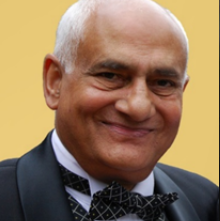
Khurshid Hassan Drabu CBE (8 March 1946 to 20 April 2018) [Plot M4]
Khurshid Hassan Drabu, was the first Muslim judge in Britain serving on immigration and asylum matters, and one of the most influential and senior figures in the Muslim community in the UK. He devoted his life to working for community cohesion and promoting dialogue between faiths.
Khurshid was born in Srinagar, Kashmir to Ghulam Nabi Drabu and Zarifa. He studied at Tynedale Biscoe School, and then Sri Pratap College to complete a BA in Political Science. In 1969 he completed a law degree at Aligarh University. He played first class cricket for Jammu and Kashmir cricket team from 1963 to 1970 as an opening batsmen and he once hit the Indian cricketer Bishan Bedi for four fours in one over.
In November 1971, he moved to England with £3 in his pocket and became a law lecturer. He was called to the bar in 1977. Between 1978 and 1980 he served as an advocate in the high court in Kashmir before returning to England to specialise in immigration law.
In 1987, he became deputy director of the Immigration Advisory Service, helping advise immigrants upon their rights. He became well known for his expertise in immigration law winning a number of landmark cases. He was described by a Home Office minister as “the authority in immigration law”.
In 1990, he became the first deputy legal director and head of litigation of the Commission for Racial Equality, a position he held until 1997. While at the Commission for Racial Equality, Drabu was in charge of reviewing the Race Relations Act 1976.
In his judicial career he served for 12 years as president of the Mental Health Review Tribunal. In 1996, he was appointed to the Immigration and Asylum Tribunal. He became vice president of the Tribunal in 2000 and served there until 2007. He still heard cases after retirement in the Upper-Tier Immigration Tribunal and was a visiting lecturer at the University of Middlesex.
Khurshid was one of the founders of the Muslim Council of Britain, an umbrella body with over 500 mosques and charitable organisations affiliated to it. He helped draft its constitution and served as its legal adviser to the MCB. After the July 2007 bombings in London, Drabu (amongst others) set up the Mosques and Imams National advisory Board with the aim of promoting good governance in mosques and higher standards for Imams.
For Khurshid, the issues of our time and for the wider community were urgent ones. In 2005 he spoke about his fears for a young generation of British Muslims who found themselves alienated, caught between western modernity and their own religious and social traditions. He wanted Muslim youth to see the best of Islam without being alienated, and the same could be said for non-Muslims who were in contact with him: for his was a life devoted to the meeting of minds.
Khurshid also found the time to serve as an adviser to the Ministry of Defence and encouraged Muslims to join the armed forces. Under his tenure, the number of Muslims serving in the armed forces increased from 25 to almost 800.
In the 2010 Queen’s Birthday Honours, he was awarded a CBE for “bringing communities together”.
He once said “my inspiration for putting in the long hours for community work is the future of my children and grandchildren and the nation as a whole. I use hope that one day we will live in a society where there is a better understanding of each other. That is all I seek really.”

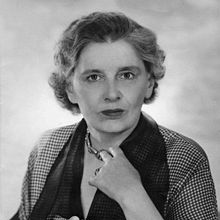
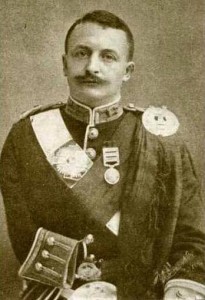
 Major Meiklejohn was buried with full military honours. The first part of the service was held in the private chapel of the Middlesex Hospital, where he died. A military procession to the Necropolis station followed, whilst at Brookwood a short service took place in the cemetery chapel before the burial took place.
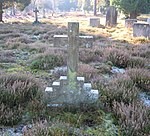
 In 1876 he was appointed to report on the state of the Syrian and Chaldean churches, resulting in the Archbishops’ Mission to the Assyrian Christians. Edward Cutts later described these travels in his Christians Under the Crescent in Asia (1877). Edward Cutts was also interested in archaeology and ecclesiastical history and published many books on these topics.