Alex Meadows Rendel

Sir Alex Meadows Rendel (1829-1918) [PLOT 45]

Civil Engineer.
Born on the 3rd April, 1829, educated at King’s College, Canterbury, and Trinity College, Cambridge, he began his engineering career under his father, the late James Meadows Rendel, on the death of his father, in 1856, he succeeded him in the business.
He was appointed engineer to the London Dock Co, and among the works carried out in the Port of London for which he was responsible were the Hermitage Wharf, the Shadwell Basin, and the extension of the Victoria Dock, now the Royal Albert Dock.

He was responsible also for the Edinburgh and Albert Docks at Leith. Other docks designed by him were Workington, Llanelly and Kirkaldy, and Milford. His principal work, however, lay in India. In 1857, he was appointed consulting engineer to the East Indian Railway, and, in 1872, became consulting engineer to the Secretary of State for India. From that time onward he was responsible for the building up of the great State railway system, for the construction of many thousands of miles of railways, and for the bridging of most of the great rivers in that country, notably the Upper Sone Bridge on the East Indian Railway, the Alexandra Bridge over the Chenab, the Lansdowne Bridge over the Indus at Sukkar, the Hardinge Bridge over the Ganges, and the Empress Bridge over the Sutlej.

Other railway work of somewhat less importance, Sir Alexander Rendel was consulting engineer for the Uganda Railway, for the Egyptian Light Delta Railways, and for the Mexican Railway Company.

Sir Alexander Rendel was elected a Member of The Institution of Civil Engineers in 1862 and served as a Member of the Council from 1880 to 1883.
He died in London on the 23rd January 1918.

Charles Henry Mileham

Architect. (1837-1917) [PLOT 46]

Born in Aylesham, Norfolk. Moved to London. He concentrated mostly on designs for Schools, Country Houses, and Churches. He designed a bespoke factory for Chubb Locks and a luxurious Grand Hotel in Southwold. His work is also on display in the Cemetery in the Lych Gate at the entrance of the St Albans PLOT and the Calvary Cross also in the PLOT, he also designed the Mackonochie Chapel attached to St Albans church.

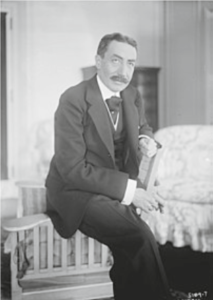
Emile-Ernest de Cartier de Marchienne

Belgian Ambassador.

Baron de Cartier de Marchienne (1871-1946) [PLOT 55] 

Baron Emile-Ernest de Cartier de Marchienne born 30th November 1871 in Schaerbeek, Belgium, was a Belgian diplomat. Emile de Cartier de Marchienne was Belgian Minister in the United StatesChina, the United KingdomCubaHaiti, and the Dominican Republic. Before that he had been the charge d'affaires in BrazilJapan, China, and France. He died 10th May 1946 in London.

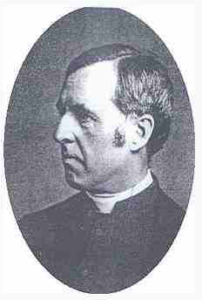
Alexander Heriot Mackonochie

Curate of St Albans. Reverend Alexander Heriot Mackonochie (1825-1887) [PLOT 46]

Born at Fareham, Hampshire, 11th August 1825, was third son of George Mackonochie, a retired colonel in the army. He was educated at schools at Bath and Exeter, and attended lectures, at Edinburgh University for a short time. He was ordained in Lent 1849, and became curate at Westbury, Wiltshire. In October 1852 he obtained a curacy at Wantage, Berkshire. In 1862 he became curate-in-charge of St. Alban's, Holborn, which was then being built by John George Hubbard on a site given by Lord Leigh.

The church was consecrated 21st February 1863. Mackonochie had by this time adopted advanced views as to ritual, and from the first had difficulties at St. Alban's. Before he was appointed a strong protest was made by a neighbouring clergyman, and as he gradually added to the ceremonies, he was subjected

to a long series of lawsuits promoted by the Church Association. Lord Shaftesbury, who visited St. Alban's in 1866, made a note on the service in his diary, 'In outward form and ritual it is the worship of Jupiter or Juno;' others regarded Mackonochie as a Jesuit in disguise. In 1865 Mackonochie had become chaplain to the sisterhood of Haggerston. More lawsuits followed in light of his way of preaching.

In December 1887, being in weak health, he went on a visit to the Bishop of Argyll and the Isles at Ballachulish, he went out for a walk over the hills, Mackonochie was found dead on the 17th December 1887, in the deer forest of Manore, twenty miles from Ballachulish. His funeral service took place at St Alban’s and was well attended. In 1890 a chapel at St Alban’s was dedicated to his memory.

Alfred William Hunt

Landscape Painter. Alfred William Hunt (1830-1896) [PLOT 56]

Alfred William Hunt was born in Liverpool in 1830. He began to paint while at the Liverpool Collegiate School. However at his father's suggestion he went in 1848 to Corpus Christi College, Oxford to study classics. His career there was distinguished; he won the Newdigate Prize in 1851 for his poem Nineveh, and became a Fellow of Corpus in 1853.

He did not, however, abandon his artistic practice for, encouraged by Ruskin, he exhibited at the Royal Academy in 1854, and afterwards contributed landscapes in oil and water-colour to London and other provincial exhibitions. In 1861 he married, and in 1862 was elected as an Associate of the Old Water-Colour Society, receiving full membership in 1864. He was associated with the Pre-Raphaelite Brotherhood.

His wife Margaret Raine Hunt wrote several works of fiction.

Their daughter Violet Hunt, was a novelist.

Search the Brookwood Cemetery Website

Generic selectors
Exact matches only
Search in title
Search in content
Post Type Selectors
Search in posts
Search in pages